How to Drive Properly with Back Pain
How to Drive Properly with Back Pain — practical guidance from chiropractors at Flintridge Family Chiropractic in La Cañada Flintridge. Schedule a visit at (818
Small changes to how you sit, stand, sleep, and move can dramatically reduce pain — sometimes more than any single treatment. Here's what we coach our own patients to do.
Why Daily Habits Matter More Than You Think
You spend 8+ hours a day in postures that either help you heal or keep you stuck. Even the best treatment in the world can't undo 16 hours of bad mechanics.
What to Do
Here are the changes that move the needle fastest:
- Set up your workstation so your screen is at eye level
- Stand and walk for 2 minutes every 30 minutes
- Use lumbar support whenever you're seated
- Sleep on your back or side, never your stomach
- Hydrate — discs need water to stay healthy

What to Avoid
These common habits quietly make pain worse:
- Looking down at your phone for long stretches
- Crossing your legs when seated
- Carrying a heavy bag on one shoulder
- Sitting on a wallet in your back pocket
- Sleeping with too many pillows
How Long Until You Feel a Difference
Most patients notice meaningful change in 2–4 weeks of consistent practice. Combined with chiropractic adjustments and corrective exercise, results compound quickly.
Why People Across the Foothills Choose Flintridge Family Chiropractic
Patients drive in from La Cañada Flintridge, Pasadena, Glendale, La Crescenta, Montrose, Altadena, Burbank, Arcadia, and Monrovia because we do chiropractic differently:
- On-site digital X-rays so your doctor can see exactly what's going on — not guess
- High-end, unhurried care — you get real time with a real doctor, every visit
- We work closely with you — every plan is tailored to YOUR goals, not a template
- Trusted by pro athletes — official team chiros for USWNT, LAFC, and LA Galaxy
- 50+ years combined clinical experience across three doctors
- 2,100+ verified five-star Google reviews — more than almost any clinic in the area
- Same-week new-patient appointments — usually same-day when you need it

What the Research Actually Says
Modern chiropractic care is one of the most evidence-supported conservative options for spine, joint, and nerve-related complaints. Major clinical guidelines — including those published by the American College of Physicians — recommend spinal manipulation as a first-line, non-drug option before considering imaging, injections, or surgery for many common musculoskeletal complaints.
In plain English: chiropractic should usually be tried BEFORE pills or procedures, not after.
How We Build Your Care Plan
- Listen. A real conversation about your history, pain pattern, goals, and lifestyle.
- Examine. Hands-on orthopedic, neurological, posture and movement screening.
- Image (if needed). On-site digital X-rays in seconds — no separate radiology trip.
- Explain. We show you exactly what we found, in language that makes sense.
- Adjust + Rehab. Gentle, specific adjustments paired with soft-tissue work and home exercises.
- Re-evaluate. We measure progress and adjust the plan — care should always be moving you forward.
What Patients Tell Us
"I wish I'd come in sooner. The doctors actually listened, showed me the X-rays, and explained everything. I felt better after the first visit." — Verified Google review
"I've been to three other chiropractors. This is the only place that felt high-end and personalized. They worked closely with my orthopedist too." — Verified Google review

Insurance, Pricing & Scheduling
We accept most major PPO insurance plans and offer transparent cash pricing for patients without coverage. New patients can usually be seen within the same week — often the same day. Se habla español.
Serving La Cañada Flintridge and the Greater Foothills
Flintridge Family Chiropractic is centrally located on Foothill Blvd and easily accessible from La Cañada Flintridge, Pasadena, Glendale, La Crescenta, Montrose, Altadena, Sunland, Tujunga, Burbank, Arcadia, Sierra Madre, and Monrovia. Whether you're an Olympic athlete, a working parent, a student-athlete, an expectant mom, or a retiree wanting to stay active — we have a doctor and a plan for you.
Ready to Feel Better?
Don't wait until a small problem becomes a big one. Call (818) 952-0172 or book your appointment online. New-patient consultations available this week. Most PPO insurance accepted. Same-day appointments often possible.

When to See Us
If how to drive properly with back pain is something you're personally dealing with, you don't have to figure it out alone. At Flintridge Family Chiropractic in La Cañada Flintridge, our doctors have helped thousands of patients — from active parents to professional athletes — recover, move better, and stay out of pain. We'll evaluate your spine, your posture, and your specific symptoms, then build a care plan that fits your life.
- New patient consultations available this week
- Most PPO insurance accepted
- Same-day appointments often possible
- Serving La Cañada Flintridge, Pasadena, Glendale, La Crescenta, Montrose, and Altadena
Call (818) 952-0172 or book your appointment online. Most patients say their only regret is not coming in sooner.
<!-- EXPANDED-V1 -->Understanding the Root Cause
Most people who come to us about to drive properly with back pain have already tried the obvious things — rest, ice, over-the-counter pain relievers, maybe a stretch they found online. Sometimes those help short-term. But when symptoms keep coming back, it usually means the underlying mechanical problem hasn't been addressed.
The spine is a stack of 24 moving joints, each one wrapped in ligaments, supported by deep stabilizing muscles, and threaded by the spinal cord and the nerve roots that branch off it. When any segment loses normal motion — from a fall, a car accident, repetitive desk posture, sleeping wrong for weeks, pregnancy mechanics, sports impact, or even prolonged stress — the surrounding muscles tighten to protect the area, blood flow drops, inflammation builds, and nearby nerves can become irritated. That cluster of changes is what most people actually feel as pain, stiffness, tingling, headaches, or restricted movement.
Chiropractic care is built specifically to identify those restricted segments and restore normal motion to them — gently, precisely, and in a way that the body can actually hold onto.
Why Most "Quick Fixes" Don't Hold
Pain medication, muscle relaxers, and injections can quiet symptoms, but they don't change the mechanics underneath. That's why so many patients tell us, "It works for a few days, then it comes right back." Surgery is sometimes necessary — but it's a one-way decision, the recovery is long, and most major clinical guidelines now recommend conservative care like chiropractic FIRST, before imaging, injections, or operating.
Generic stretching helps in some cases, but if the joint above or below is the one that's actually stuck, stretching the painful muscle can make things worse. That's the difference between guessing and assessing: a chiropractor finds the specific segment that's not moving and treats THAT, instead of chasing symptoms around the body.
What the Evidence Says
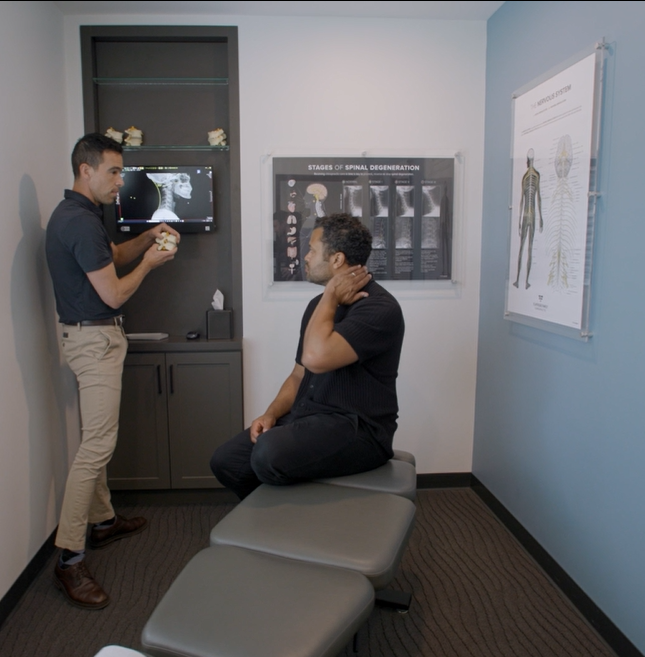
Spinal manipulation is one of the most studied conservative treatments in musculoskeletal medicine. Randomized trials and major guideline reviews — including those published by the American College of Physicians, the Lancet Low Back Pain series, and the Global Spine Care Initiative — consistently support manual therapy and chiropractic adjustment as a first-line, non-drug option for the majority of common neck, back, and joint complaints. For conditions related to to drive properly with back pain, the research generally points the same direction: conservative care first, surgical or pharmacologic intervention only when conservative care has been given a fair trial.
In our office, that means we won't push imaging, injections, or referrals unless your exam findings actually call for them. We'll start with what the evidence supports, measure progress, and only escalate if your body tells us we need to.
What Recovery Usually Looks Like Week by Week
Every patient is different, but here's a realistic timeline most people fall into:
- Week 1 (visits 1–3): The goal is to calm down the irritated tissues and restore basic joint motion. Many patients feel noticeably better within the first 2–3 visits — sometimes after the very first adjustment.
- Weeks 2–4: Pain becomes less frequent and less intense. We start layering in soft-tissue work, posture correction, and a small set of home exercises so your body learns to hold the new alignment.
- Weeks 4–8: Symptoms are usually 70–90% improved. We re-examine, re-test ranges of motion, and either taper visits or shift you into a corrective/maintenance phase depending on your goals.
- Beyond: Many patients choose periodic "tune-up" visits the way they would see a dentist — not because they have to, but because they feel better when they do. You always choose your own pace.
Mistakes We See Patients Make
- Waiting too long. The longer a joint stays restricted, the more the surrounding tissues adapt around it, and the longer the corrective phase takes. Coming in early almost always means fewer total visits.
- Stopping the moment pain goes away. Pain is the LAST symptom to appear and the FIRST to leave. The mechanical issue underneath usually needs a few more visits to fully stabilize.
- Self-cracking. Forcing your own neck or back doesn't restore motion to the stuck segment — it usually mobilizes the joint above or below, which is already too loose. That's why the "relief" only lasts a few minutes.
- Ignoring posture between visits. A 10-minute adjustment can't outrun 10 hours of slumped desk posture. The home-care plan matters as much as the in-office work.
- Comparing yourself to someone else's timeline. Two patients with the same diagnosis can have very different recoveries depending on age, sleep, stress, hydration, prior injuries, and how consistent they are with care.
What You Can Do Between Visits
We give every patient a small, specific home plan — usually two or three things, not twenty. Common building blocks include:
- A short morning mobility routine to wake the spine up before sitting down
- Two to three corrective exercises targeted to YOUR exam findings, not a generic handout
- Sleep position adjustments (pillow height, mattress support, side vs. back)
- Workstation tweaks — monitor height, chair depth, keyboard distance, standing breaks
- Hydration and basic anti-inflammatory nutrition guidance
- Stress and breathing work, because the nervous system drives muscle tone whether we like it or not
None of this is exotic. It's the boring, daily stuff that, combined with hands-on care, actually changes outcomes.
Frequently Asked Questions
Will the adjustment hurt? Almost never. The vast majority of patients describe adjustments as a relief — a release of pressure, not a creation of it. We adjust gently, with your feedback, and we have lower-force techniques (drop-table, instrument-assisted, Activator) for patients who prefer them or whose condition calls for them.
How many visits will I need? Honestly, we don't know on day one — and you should be skeptical of any clinic that gives you a long-term number before they've examined you. After the first 2–3 visits we re-assess and give you a realistic range based on how your body is responding.
Is it safe? Yes. Chiropractic care has one of the strongest safety profiles in musculoskeletal medicine — significantly safer than long-term NSAID use, opioid prescriptions, or spinal surgery. We screen carefully on the first visit so we know exactly which techniques are appropriate for you.
Do you take insurance? We accept most major PPO plans and offer transparent cash and package pricing for patients without coverage. We'll verify your benefits before your first visit so there are no surprises.
Can I come in even if I'm not in pain? Absolutely. A growing share of our patients use chiropractic for performance, posture, sleep quality, recovery, and prevention — not just pain.
The Flintridge Family Chiropractic Difference
We've built our practice around a few non-negotiables that, frankly, are still rare in chiropractic:
- On-site digital X-ray so your doctor can see exactly what's happening — no guessing, no separate radiology trip.
- Real time with a real doctor every visit. No assembly-line care, no being shuffled to a tech.
- Three doctors, 50+ years of combined clinical experience, and ongoing training in pediatric, prenatal, sports, and post-accident care.
- Trusted by elite athletes — official team chiropractors for the U.S. Women's National Team, LAFC, and the LA Galaxy — using the same hands-on care with every patient who walks through the door.
- 2,100+ verified five-star Google reviews, more than almost any clinic in the foothills.
- Same-week (often same-day) new-patient appointments, transparent pricing, and most PPO insurance accepted.
- Se habla español.
If you've been searching for answers about drive, properly, with, back, pain, we'd be glad to take a look, give you a straight answer, and build a care plan that actually fits your life. Call (818) 952-0172 or book your appointment online.
<!-- EXPANDED-V2 -->A Deeper Look at How to Drive Properly with Back Pain
Most patients we see for "how to drive properly with back pain" arrive with a familiar story: the symptom started small, they ignored it, then it grew. By the time they search online, they've already tried rest, ibuprofen, a foam roller, maybe a YouTube stretch routine, and possibly a friend's recommendation. Some of that helps short-term. None of it addresses the underlying mechanical problem driving the symptom. Below we go into the level of detail we'd normally only get to in a long consultation — the anatomy involved, why episodes recur, what a complete care plan actually looks like, and what to expect at every stage.
The Anatomy You Need to Understand
The spine is not a single rigid column. It is a stack of 24 movable vertebrae plus the sacrum and coccyx, separated by intervertebral discs and bound together by ligaments and a deep layer of stabilizing muscles. Threaded through the center is the spinal cord, with 31 pairs of nerve roots branching out between the vertebrae to supply every muscle, organ, and patch of skin in the body. When one segment of this column stops moving the way it should — what chiropractors call a subluxation or joint restriction — the consequences are not local. Surrounding muscles tighten to protect the area, blood flow drops, inflammatory chemistry rises, and the nerve roots passing through that level can become irritated. That cluster of changes is what most people actually feel as pain, stiffness, numbness, tingling, headaches, jaw tension, or simply a vague sense that something "isn't right."
For conditions related to how to drive properly with back pain, the segments most often involved are the upper cervical spine (C1–C2), the cervicothoracic junction (C7–T1), the thoracolumbar junction (T12–L1), and the lumbosacral junction (L5–S1). These are transition zones where the curvature, mobility, and load-bearing demands of the spine change abruptly — and where mechanical problems tend to concentrate. A thorough chiropractic exam identifies exactly which of these segments are restricted, which are hypermobile (the opposite problem), and which soft-tissue structures have compensated.
Why Symptoms Keep Coming Back
The single most common frustration we hear is: "I felt better for a few days, then it came right back." There is a clear reason for this, and it is not a mystery.
When a joint has been restricted for weeks, months, or years, the surrounding muscles, ligaments, and fascia adapt to the dysfunction. The nervous system learns the dysfunctional movement pattern as "normal." So when a single adjustment, a massage, or a stretch temporarily restores motion, the surrounding soft tissue immediately pulls the joint back into its old position because that is what the body has been trained to do. Lasting change requires three things in sequence: restoring joint motion (the adjustment), releasing the soft tissue holding the dysfunction (manual therapy), and retraining the nervous system to hold the new alignment (corrective exercise). Skip any one of those three and the symptom returns. This is why a serious care plan for how to drive properly with back pain is never just "come in for an adjustment when it hurts."
What the Research Actually Shows
The conservative-care literature on conditions like this is now extensive. Major guideline reviews — including those published by the American College of Physicians, the Lancet Low Back Pain series, the Global Spine Care Initiative, and the NICE guidelines in the UK — consistently recommend spinal manipulation, mobilization, and exercise therapy as first-line, non-drug options for most common musculoskeletal complaints. The evidence base for chiropractic care has matured dramatically over the past two decades. Randomized controlled trials, systematic reviews, and large pragmatic cohort studies all point in the same direction: when patients receive timely conservative care, the majority recover faster, use fewer opioids, undergo fewer injections, and have lower rates of eventual surgery than patients managed with medication alone.
This is not a fringe opinion. Spinal manipulation is now recommended before imaging, injections, or surgery in the official treatment algorithms of the American College of Physicians for acute, subacute, and chronic low back pain. The same direction-of-evidence applies to most neck pain, cervicogenic headache, certain types of dizziness, jaw dysfunction, and a long list of extremity complaints. The practical takeaway: conservative care should usually be your first stop, not your last resort after pills and procedures have failed.
What a Complete Care Plan Looks Like
A well-designed plan for how to drive properly with back pain has three distinct phases, and we explain all three on your first visit so there are no surprises.
Phase 1 — Relief care (typically visits 1–6, over 2–3 weeks). The goal here is to calm down irritated tissue and restore basic joint motion. Most patients feel meaningfully better within the first 2–3 visits. We use specific, controlled adjustments to the restricted segments, layered with soft-tissue work to the surrounding muscles. We do not chase pain around the body — we identify the source and treat it. If your pain pattern suggests a disc, nerve root, or structural concern, this is when we use on-site digital X-ray to rule things in or out before continuing.
Phase 2 — Corrective care (typically visits 6–18, over 6–10 weeks). Once acute irritation is down, we shift focus to retraining the body to hold the new alignment. This is where home exercise becomes critical — usually a short, specific list of 3–5 movements tied to your exam findings. We re-evaluate posture, gait, and movement patterns to make sure changes are sticking. Most patients reduce visit frequency during this phase from 2–3 times per week to once a week or every other week.
Phase 3 — Wellness or maintenance care (visit cadence depends on your goals). This is the phase most active adults, athletes, and parents stay in long-term. Visits drop to every 2–4 weeks. The goal is to catch small restrictions before they become symptomatic again, the same way you'd see a dental hygienist twice a year rather than wait for a cavity. Wellness care is optional. We will never pressure you into it, and we will tell you plainly when you no longer need active care.
What Your First Visit Actually Includes
There is nothing mysterious about the first appointment. We ask. We examine. We image only if your findings call for it. We explain what we found in plain language. We adjust. We schedule a follow-up to re-measure.
The conversation portion is unhurried — typically 15–20 minutes — because the history is where most of the diagnosis actually lives. We want to know when symptoms started, what makes them better or worse, how they affect your sleep, your work, your training, and your mood. The hands-on exam includes orthopedic testing, neurological screening (reflexes, sensation, strength), posture and gait assessment, and segmental palpation of the spine and pelvis. Together, those tell us where to focus.
If imaging is indicated, our on-site digital X-ray takes about five minutes and the images are available immediately. You will see the films with your doctor and have your findings explained in language that makes sense — not jargon. We do not order routine imaging on every patient. Major guidelines recommend against routine imaging for most uncomplicated musculoskeletal complaints because it does not change the treatment plan and can increase patient anxiety without improving outcomes. We image when it changes what we will do, and not before.
How We Customize Care for Different Patients
A 35-year-old marathon runner, a 72-year-old grandmother with osteoporosis, a pregnant patient in her third trimester, and a six-month-old infant with torticollis all need fundamentally different approaches. Modern chiropractic technique includes a wide spectrum of force levels and modalities, and the right doctor matches the technique to the patient — not the patient to a single technique.
For athletes and active adults, we typically use traditional diversified adjustments, instrument-assisted soft-tissue work, and sports-specific mobility prescriptions. For pregnant patients, we use the Webster Technique, side-posture adjustments with appropriate bolstering, and pelvic balancing — every doctor on our team is Webster-trained. For pediatric patients, force is dialed down to the equivalent of testing the ripeness of a tomato. For older adults or patients with osteopenia, we frequently use low-force techniques such as Activator, drop-table, and gentle mobilization rather than traditional manual adjustments. The point is: there is a safe, effective approach for nearly every patient — the work is matching the right approach to your specific situation.
Home Care That Actually Moves the Needle
Adjustments in the office only account for part of your progress. What you do in the 23 hours between visits matters at least as much. We will never hand you a generic exercise sheet. Your home program is built from your exam findings and updated as you progress. Most patients leave with three to five specific movements that take less than 10 minutes per day. We demonstrate each one, watch you perform it, and correct your form before you leave. If sleep position, desk ergonomics, or training load is contributing to the problem — and for most people it is — we cover those too with specific, actionable changes.
A few principles tend to apply across the board: motion is lotion (joints feed on movement, not rest); ice for acute pain in the first 48 hours, heat for chronic stiffness after that; sleep on your side or back, never face-down with a twisted neck; if you sit for work, stand and move briefly every 30–45 minutes; if you train hard, recover harder. None of this is exotic. All of it is consistent with current evidence.
Insurance, Cash Pricing, and What Care Actually Costs
We accept most major PPO plans and verify benefits before your first visit so you know exactly what your visit will cost. For patients without insurance or with high deductibles, we offer transparent cash pricing that is significantly more affordable than urgent care or the emergency room for the same complaint. Most new patients can be seen within the same week — frequently the same day. There is no long-term contract, no auto-renewing membership, no pressure to commit to a 60-visit prepayment plan before you have met the doctor. Care plans are built around your goals, your schedule, and your budget, and you are always free to stop, slow down, or change direction.
When You Should Not Wait
Most of what we see is musculoskeletal and conservatively managed. But there are a small number of red-flag signs that mean you should be evaluated quickly — by us, by your primary care physician, or in some cases by an emergency department. These include: progressive weakness in an arm or leg, loss of bowel or bladder control, numbness in the groin or inner thighs (saddle anesthesia), unexplained weight loss with back pain, fever with back pain, severe pain after significant trauma, or chest pain with neck or arm symptoms. If any of those describe you, do not wait — get evaluated today.
Why Patients Across the Foothills Trust Us
Patients drive in from La Cañada Flintridge, Pasadena, Glendale, La Crescenta, Montrose, Altadena, Burbank, Arcadia, Monrovia, Sunland, Tujunga, Sierra Madre, and surrounding cities because we have built the practice we ourselves would want to be patients in: four licensed doctors with combined experience well past 50 years, on-site digital X-ray, unhurried appointments, a calm and clean environment, transparent pricing, and a team that follows through. We are the official chiropractors for the U.S. Women's National Soccer Team, LAFC, and LA Galaxy — and every single patient who walks through the door receives the same standard of care those athletes do, whether you are a parent with a sore lower back, a student with headaches, an expectant mom preparing for delivery, a tradesperson with shoulder pain, or a retiree who simply wants to keep gardening without pain.
We have more than 2,100 verified five-star Google reviews — more than nearly any clinic in the area — and the reason is consistent across the reviews: people feel heard, they understand what is happening in their body, they get better, and they leave knowing they were treated like a person and not a billing code.
What Patients Tell Us About Their Recovery
"I had been to two other chiropractors and a physical therapist before coming here. The difference was night and day. They took X-rays, sat down with me, showed me exactly what was going on, and built a plan I could actually follow. I'm three months in and back to running." — Verified Google review
"I was skeptical of chiropractic. My doctor recommended it before considering an MRI. After six visits I'm 80% better, sleeping through the night again, and off the pain medication. I should have come a year ago." — Verified Google review
"I went in for one thing and got educated on five others. They are honest about what chiropractic can and cannot do, they don't push unnecessary visits, and the front desk is the most organized I have ever seen at a medical office." — Verified Google review
Frequently Asked Questions
How long until I feel better? Most patients notice meaningful change in the first 2–3 visits. Full resolution and stabilization typically takes 4–10 weeks depending on how long the problem has been present.
Is the adjustment safe? Yes. Spinal manipulation by a licensed chiropractor has a very strong safety record — better than most over-the-counter pain medications when measured by serious-adverse-event rates per encounter.
Do I have to keep coming forever? No. The goal of care is to get you better and teach you to maintain it. Maintenance care is optional, not required.
Will it hurt? Almost never. Most adjustments feel like relief. If a specific technique is uncomfortable for you, we have many alternatives.
Do you take my insurance? We accept most major PPO plans and verify your benefits before you arrive. For HMO and out-of-network patients we offer cash pricing that is genuinely affordable.
Can I come if I have not seen a regular doctor yet? Yes. Chiropractors are licensed primary contact providers. If your exam findings suggest you need additional medical workup, we will refer you to the right specialist.
Ready to Get This Handled?
You have read this far because something is bothering you and you want it to stop. The next step is simple. Call (818) 952-0172 or book your appointment online. Most new patients are seen within the same week — often the same day. Most PPO insurance accepted. Se habla español. Free parking. Easy access from the 210 and 134 freeways.
If "how to drive properly with back pain" is something you have been putting off, this is your sign to stop putting it off. The longer mechanical dysfunction is allowed to compensate, the more layers of soft tissue have to be unwound to fix it. The best time to address this was probably a year ago. The second best time is this week.
We will examine you, explain what is going on, and tell you honestly whether chiropractic care is the right answer for you. If it is not, we will tell you that too, and point you to the right provider. Either way, you will leave with clarity — and that, by itself, is worth the visit.
Additional Considerations and Patient Education
Lifestyle Factors That Influence Your Outcome
Recovery is rarely just about the time spent on the adjusting table. Sleep quality, stress load, hydration, nutrition, training volume, and even posture during seemingly insignificant daily activities — brushing your teeth, scrolling on your phone, driving your commute — all influence how quickly tissues heal and how durably the changes hold. Patients who pair clinical care with intentional changes to one or two of these areas consistently progress faster than patients who rely on care alone. We will help you identify the highest-leverage change for your specific situation, rather than handing you a 14-item lifestyle checklist that nobody actually follows.
Sleep is the single biggest underrated variable. The body lays down most of its repair and remodeling work during deep sleep stages, and chronic short sleep meaningfully slows musculoskeletal recovery. If you are getting fewer than seven hours, that is the first lever to pull. Hydration is the second underrated variable — intervertebral discs are 80% water and rely on a daily imbibition-and-compression cycle to stay healthy. Chronic mild dehydration accelerates disc degeneration over years. Plain water, not coffee or sports drinks, is what your discs are asking for.
How Posture Actually Affects the Spine
Posture is not about standing up straight on command. It is about the resting tone and length of the deep stabilizing muscles that hold the spine in a neutral position when you are not thinking about it. Those muscles adapt — for better or worse — to whatever positions you spend the most time in. If you spend eight hours a day with your head jutted forward over a laptop, your deep neck flexors progressively weaken, your upper trapezius and suboccipital muscles progressively shorten, and within a few years the resting position of your head and neck physically changes. This is reversible, but it requires both the manual work to release the shortened tissue and the corrective work to retrain the weakened tissue. Adjustments alone will not undo a decade of postural adaptation. Adjustments plus the right corrective work absolutely will, given enough consistency.
When We Coordinate Care with Other Providers
Chiropractic is one specialty in a larger ecosystem. For complex cases, we coordinate directly with primary care physicians, orthopedic surgeons, neurologists, pain-management specialists, OB-GYNs, pediatricians, physical therapists, massage therapists, acupuncturists, and personal trainers. We have working relationships across the foothills with providers in nearly every specialty. If your case calls for advanced imaging, an injection, a surgical consult, or co-management with another discipline, we will refer you to providers we trust and stay in the loop on your progress. The goal is your outcome, not protecting our caseload.
The Honest Limits of Chiropractic Care
There are things chiropractic does very well, things it does moderately well, and things it does not address. We will always be straight with you about which bucket your situation falls into. Conservative manual care is excellent for mechanical neck and back pain, headaches of cervical origin, joint dysfunctions of the spine and extremities, pregnancy-related musculoskeletal complaints, postural problems, and many sports injuries. It is moderately helpful for some types of vertigo, jaw dysfunction, certain disc problems, and select extremity nerve entrapments. It is not the right primary treatment for fractures, tumors, infections, progressive neurological disease, or surgical emergencies. If your situation calls for one of those, we will recognize it on the exam and route you appropriately — often the same day.
Building Long-Term Resilience
The patients who get the best long-term outcomes do not stop at symptom resolution. They use the relief phase as a springboard into building genuine resilience — better mobility, better strength, better movement patterns, better awareness of how their body responds to stress. The result is not just absence of pain. It is meaningfully better function: sleeping better, training harder, recovering faster, sitting through long meetings without distraction, playing with kids or grandkids without thinking about it. That is the real goal of care, and it is achievable for nearly every patient who is willing to commit to the process.