
Whiplash After a Car Accident in Tujunga: Causes, Care and Realistic Timelines
Whiplash After a Car Accident in Tujunga? Causes, examination, chiropractic care and realistic timelines from Flintridge Family Chiropractic. Call (818) 791-4
This is a practical, plain-language guide to whiplash after a car accident for people living and working in Tujunga, written by the doctors at Flintridge Family Chiropractic. Our office sits at 1809 Verdugo Blvd, Suite 150, La Cañada Flintridge, CA 91011, roughly a 18 minutes drive from the Sunland-Tujunga foothills. We have cared for Foothill families, desk workers, weekend athletes and professional teams for more than twenty years, and whiplash is one of the most common reasons a new patient calls us.
The Short Answer
Most whiplash after a car accident in adults is a mechanical problem: something is not moving well, something nearby is working too hard, and the tissue in between is irritated. Care that restores motion, then rebuilds capacity, resolves the majority of cases without injections or surgery. The assessment matters more than the technique.
If you want that assessed in person, call (818) 937-2202. Same-week appointments are usually available and same-day openings are common.
Why Whiplash After a Car Accident Shows Up the Way It Does in Tujunga
People rarely arrive with one clean cause. With whiplash after a car accident, the picture is usually a combination of a long-standing movement habit, a recent increase in load, and a stretch of poor sleep or stress that lowered your tolerance for both. Life in Tujunga adds its own pattern: long commutes on the 210 and 134, hillside driveways and stairs, desk-heavy work weeks, and weekend activity that spikes well above what the weekdays prepared you for.
None of that means you are fragile. It means your current capacity and your current demands have drifted apart. Closing that gap is the whole job.

The Anatomy, Without the Jargon
When we examine whiplash after a car accident, we are looking at the cervical joints, ligaments and the nervous system's protective guarding. Joints that glide well share load across a wide area. Joints that have stopped gliding concentrate load into a small area, and the muscles around them tighten to protect what they no longer trust. That protective tension is not the villain — it is a reasonable response — but left alone for months it becomes the thing that keeps the pattern going.
What the Examination Actually Involves
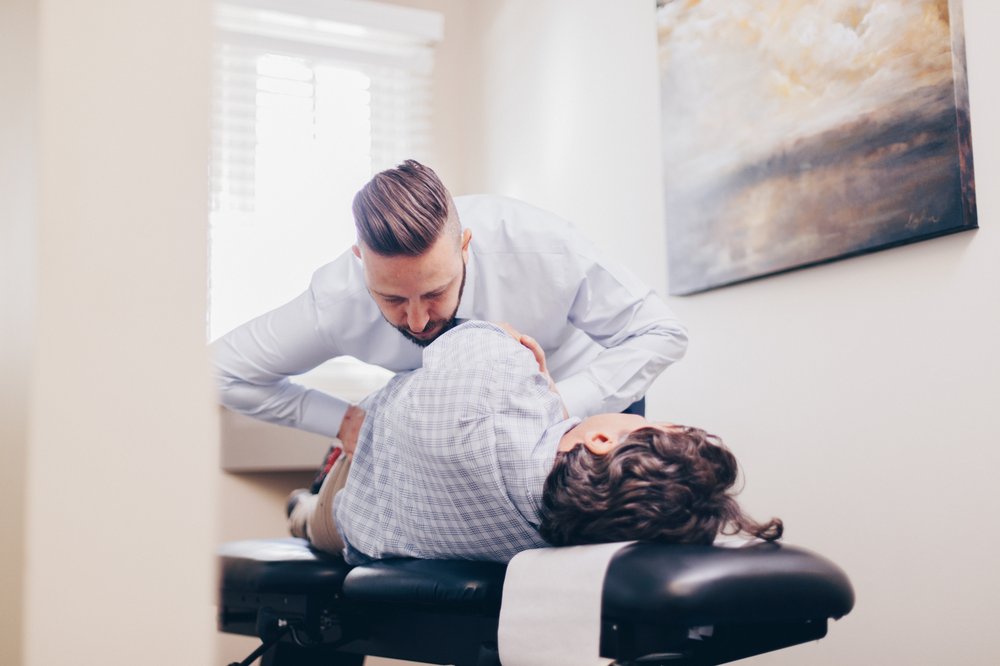
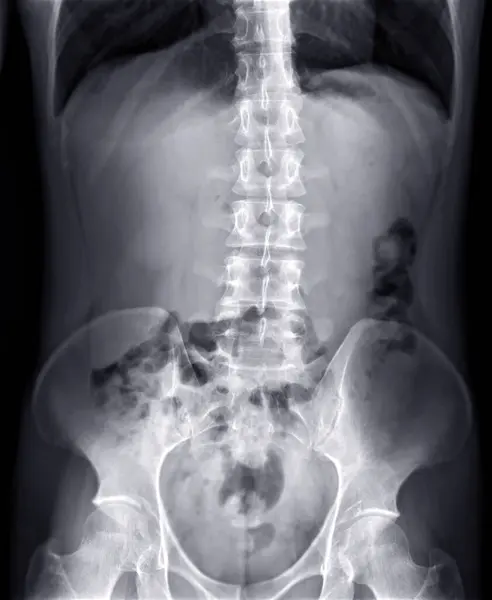
A first visit is mostly conversation and movement testing. We ask when it started, what makes it better and worse, how you sleep, what your week actually looks like. Then we watch you move: bending, rotating, walking, loading one leg at a time. We test joint-by-joint motion, check nerve function when symptoms travel, and compare sides. Imaging is ordered when the history or exam suggests it will change the plan — not by default.
The questions that tell us the most
- Does it hurt more first thing in the morning or later in the day?
- Does sitting, standing or walking give the most relief?
- Does anything travel into an arm or leg, and how far?
- What did the two weeks before symptoms started look like?
- What have you already tried, and what did it change?
What Care Looks Like Week to Week
Adjustments restore motion at the segments that have stopped contributing. Soft-tissue work reduces the guarding around them. Then loaded exercise teaches the area to tolerate real life again. Most whiplash after a car accident cases follow a recognizable arc.
Week one. The goal is calming things down and proving that movement is safe. Visits are usually two per week. Home work is short and frequent — a few minutes, several times a day.
Weeks two and three. Symptoms usually become more predictable before they become less frequent. Motion improves first, then pain follows. We start adding load.
Weeks four to six. Visit frequency drops. Strength work carries more of the plan. Most people are back to full activity here, with a short maintenance routine.
Beyond. If nothing has changed by the fourth week, the plan changes — we re-examine, adjust the diagnosis, or refer. Repeating a plan that is not working is not persistence.

The Week That Usually Precedes the First Flare
Almost nobody injures themselves out of nowhere. When we walk back through the two weeks before symptoms started, there is nearly always a change: a travel week, a move, a new mattress, a deadline stretch, a return to training after time off, a new baby, a long drive, or an illness that cut sleep in half. The tissue did not fail because it was weak. It failed because demand jumped while recovery dropped.
This matters because it tells you what to change. If the flare followed a deadline stretch, more stretching will not fix it. If it followed a training jump, rest alone will not fix it either. Matching the fix to the trigger is most of the skill in this work.
How We Decide Between Similar-Looking Problems
Several very different problems can produce whiplash after a car accident that feels identical to the person experiencing it. Sorting them out is what the examination is for. We are asking whether the pain is coming from the joint, the disc, the muscle, a nerve, or referred from somewhere else entirely — and whether it is irritable enough to need calming first or robust enough to load right away.
- Joint-dominant patterns are usually worse after stillness, better with motion, and tightly localized.
- Disc-dominant patterns often prefer one direction strongly and dislike sustained sitting or bending.
- Muscle-dominant patterns build through the day, respond well to load, and rarely travel far.
- Nerve-dominant patterns travel, may burn or tingle, and follow a recognizable path.
- Referred patterns do not change with local testing at all, which is the clue.
What Progress Actually Feels Like
Recovery is rarely a smooth line down. The usual sequence is that the bad days get shorter first, then less frequent, then less intense. Range of motion often improves a week before pain does. Many people notice they can do something — turn while reversing the car, put on shoes standing up, sleep through to morning — before they notice the pain score changed.
We track those functional markers on purpose. A pain number on a given Tuesday is noisy. “I slept through the night four times this week instead of once” is signal.
The Home Program, Honestly Described
The home program is the part that determines whether the results hold. It should take under fifteen minutes, fit into a day you already have, and change every few weeks as you improve. In the calming phase it is frequent and gentle. In the building phase it becomes less frequent and genuinely challenging — that shift is the point, not an upsell.
If the exercises you were given six weeks ago are still the exercises you are doing, something has stalled. Ask about it.
Work, Driving and Daily Load
Most Tujunga patients spend real hours at a desk and real hours in the car. Both are survivable positions; neither is a good place to be still for ninety minutes. Set an alarm, stand for a minute, change the shape of your spine, sit back down. For driving, move the seat slightly more upright than feels natural, support the low back, and take the long climb up the hill as an excuse to shift position at the top.
Small, frequent changes beat perfect posture. Nobody holds perfect posture, and the people who try usually end up tenser than when they started.
Questions Worth Asking Any Provider
- What do you think is causing this, in plain language?
- What should change in two weeks if this plan is right?
- What will we do if it does not?
- How many visits are you expecting, and when do we taper?
- What can I do on my own between visits?
A provider who answers those five questions clearly is usually a provider worth continuing with, regardless of technique.

The Week That Usually Precedes the First Flare
Almost nobody injures themselves out of nowhere. When we walk back through the two weeks before symptoms started, there is nearly always a change: a travel week, a move, a new mattress, a deadline stretch, a return to training after time off, a new baby, a long drive, or an illness that cut sleep in half. The tissue did not fail because it was weak. It failed because demand jumped while recovery dropped.
This matters because it tells you what to change. If the flare followed a deadline stretch, more stretching will not fix it. If it followed a training jump, rest alone will not fix it either. Matching the fix to the trigger is most of the skill in this work.
How We Decide Between Similar-Looking Problems
Several very different problems can produce whiplash after a car accident that feels identical to the person experiencing it. Sorting them out is what the examination is for. We are asking whether the pain is coming from the joint, the disc, the muscle, a nerve, or referred from somewhere else entirely - and whether it is irritable enough to need calming first or robust enough to load right away.
- Joint-dominant patterns are usually worse after stillness, better with motion, and tightly localized.
- Disc-dominant patterns often prefer one direction strongly and dislike sustained sitting or bending.
- Muscle-dominant patterns build through the day, respond well to load, and rarely travel far.
- Nerve-dominant patterns travel, may burn or tingle, and follow a recognizable path.
- Referred patterns do not change with local testing at all, which is the clue.
What Progress Actually Feels Like
Recovery is rarely a smooth line down. The usual sequence is that the bad days get shorter first, then less frequent, then less intense. Range of motion often improves a week before pain does. Many people notice they can do something - turn while reversing the car, put on shoes standing up, sleep through to morning - before they notice the pain score changed.
We track those functional markers on purpose. A pain number on a given Tuesday is noisy. Sleeping through the night four times in a week instead of once is signal.
The Home Program, Honestly Described
The home program is the part that determines whether results hold. It should take under fifteen minutes, fit into a day you already have, and change every few weeks as you improve. In the calming phase it is frequent and gentle. In the building phase it becomes less frequent and genuinely challenging - that shift is the point, not an upsell.
If the exercises you were given six weeks ago are still the exercises you are doing, something has stalled. Ask about it.
Work, Driving and Daily Load
Most Tujunga patients spend real hours at a desk and real hours in the car. Both are survivable positions; neither is a good place to be still for ninety minutes. Set an alarm, stand for a minute, change the shape of your spine, sit back down. For driving, move the seat slightly more upright than feels natural, support the low back, and use the climb up the hill as an excuse to shift position at the top.
Small, frequent changes beat perfect posture. Nobody holds perfect posture, and the people who try usually end up tenser than when they started.
Questions Worth Asking Any Provider
- What do you think is causing this, in plain language?
- What should change in two weeks if this plan is right?
- What will we do if it does not?
- How many visits are you expecting, and when do we taper?
- What can I do on my own between visits?
A provider who answers those five questions clearly is usually worth continuing with, regardless of technique.
What You Can Do This Week, On Your Own
- Move earlier and more often than feels necessary. Ten short bouts beat one long session.
- Reduce the single worst position rather than trying to fix everything at once.
- Protect sleep. Pain tolerance drops sharply on short sleep, and progress follows.
- Walk daily, even briefly. It is the most reliable pain-modulating activity we know of.
- Keep a two-line log of what you did and how you felt. Patterns show up quickly.
Myths Worth Retiring
"My scan showed degeneration, so this is permanent." Imaging findings are common in people with no pain at all. They describe the tissue, not your future.
"Rest is the safest option." Short rest helps. Extended rest reliably makes things worse by lowering capacity.
"If it cracks, it worked." The sound is a pressure change in the joint. Motion and symptom change are the outcomes that matter.
"Once you start, you have to go forever." You do not. A plan should have an end point, and yours should be written down.
Prevention That Survives a Busy Week
The people who stay out of our office are not the ones with the most elaborate routines. They are the ones with a short routine they actually do. Two strength sessions a week, a daily walk, and one honest change to the setup where you spend the most hours — desk, car, or couch — outperforms an hour-long program that gets abandoned by February.
Who Should Not Wait
Call promptly if you have progressive weakness, numbness in the saddle area, loss of bladder or bowel control, unexplained weight loss with night pain, fever with spinal pain, or symptoms after significant trauma. These are uncommon, but they change the plan and sometimes the provider.
Getting Seen From Tujunga
We are about a 18 minutes drive from the Sunland-Tujunga foothills, with parking on site. New patients are typically seen within one to three days, and same-day openings are common. Most major insurance is accepted, we handle personal-injury and auto cases, and we can talk through the current new-patient offer over the phone. Se habla español.
Call (818) 937-2202 or book online, and bring any recent imaging you already have.
Frequently Asked Questions
How quickly can I be seen for whiplash after a car accident in Tujunga?+
Usually within one to three days, and same-day openings are common. Call (818) 937-2202. Tujunga is roughly a 18 minutes drive from our La Cañada Flintridge office.
Do I need imaging before treatment for whiplash after a car accident?+
Not usually. Imaging is ordered when the history or examination suggests it will change the plan — for example after trauma, with progressive neurological signs, or when a case is not responding as expected.
How many visits does whiplash after a car accident normally take?+
Most straightforward cases improve meaningfully within two to six weeks, starting around two visits per week and tapering. If nothing has changed by the fourth week, we re-examine and change the plan.
Is the adjustment painful?+
It should not be. Most patients describe pressure and then relief. Techniques are adjusted for age, bone health, pregnancy and how irritable the area is, including low-force options.
Do you take insurance?+
Most major plans are accepted, and we handle auto and personal-injury cases. Call (818) 937-2202 and we will check your coverage before your first visit.