
SI Joint Pain in Pasadena: The Great Sciatica Impostor
A dime-sized ache just below the belt line, worse getting out of the car — that is usually the sacroiliac joint, not the disc. Call (818) 937-2202.
Searching for si joint pain near Pasadena? This guide was written by the doctors at Flintridge Family Chiropractic, a La Cañada Flintridge practice that has cared for Foothill families, desk workers, and professional athletes since 2005. It is written to answer your question completely — not to send you straight to a phone number.
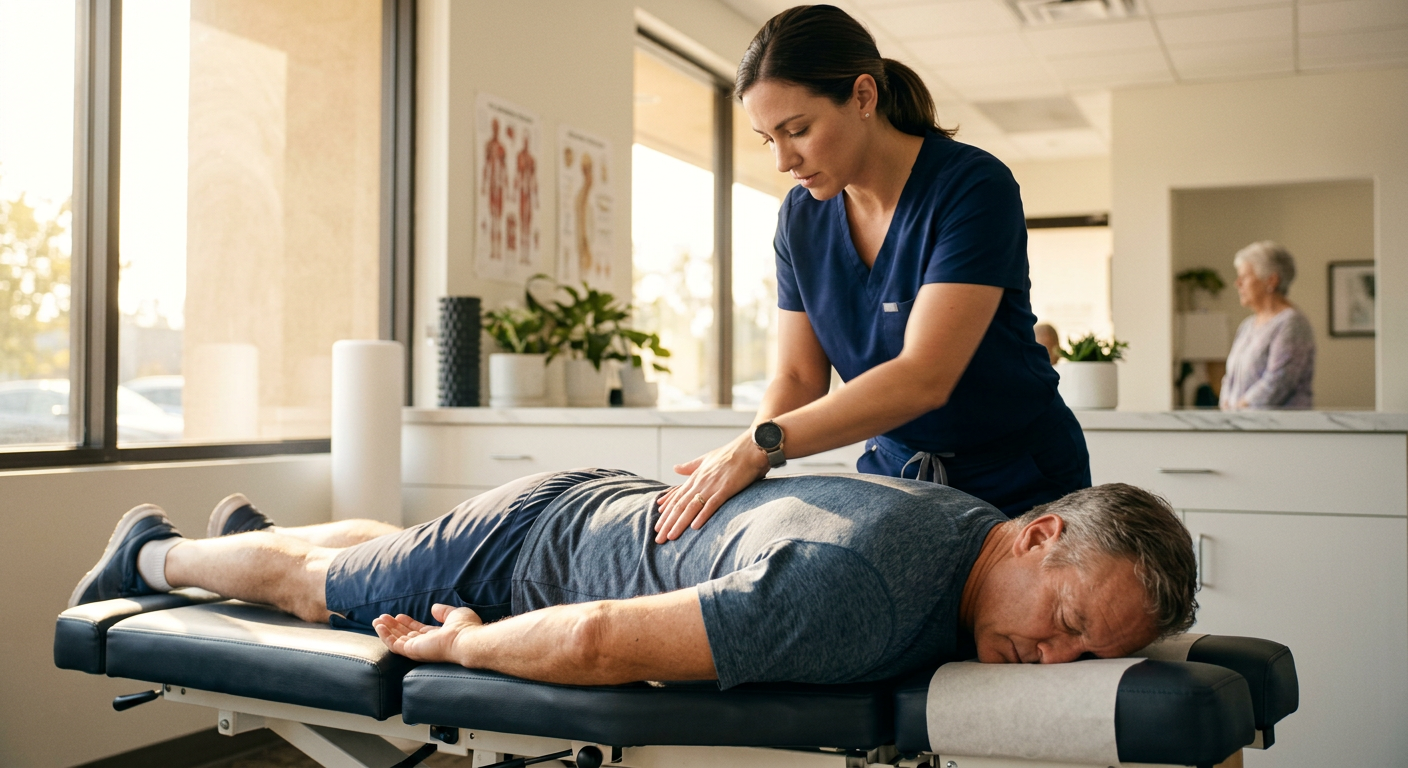
The Short Answer
SI joints get treated as low back pain for months because nobody ran the three-test cluster that identifies them. A specific mechanical examination, a plan written in plain language, and objective re-checks are what turn a stubborn problem into a resolved one. Most patients notice a real change within two to four visits. From Pasadena, we are about 12 minutes via the 210 Freeway, and same-week appointments are almost always available at (818) 937-2202.

What Pasadena Patients Should Understand First
How we confirm it
A cluster of provocation tests, run together, is far more accurate than any single test or scan.
Pregnancy and postpartum
Ligament laxity plus a shifting center of mass makes the SI joint a frequent source of pain during and after pregnancy — and it responds very well to gentle, specific care.

How We Evaluate It
Our new patient process is deliberately unhurried, because the examination is what makes treatment specific instead of generic.
- History. Onset, pattern, what makes it better and worse, prior injuries, work setup, training load, and sleep.
- Orthopedic and neurological testing. Reflexes, sensation, strength, and provocation tests that rule findings in and out rather than guessing.
- Motion palpation. Segment by segment, we identify exactly what moves and what does not.
- Digital X-ray only when indicated. Taken on site, reviewed with you the same visit. We image when the findings justify it, not by default.
- A written plan. Expected number of visits, what progress should look like, and what would make us change course or refer you out.
- Re-examination. The same objective measures repeated on schedule. No improvement means the plan changes — that part is not negotiable.
If a provider cannot tell you what they found, what they are treating, and how they will know it worked, keep looking.

What Treatment Looks Like
| Phase | Typical timeline | Goal |
|---|---|---|
| Relief | Visits 1–4 | Calm pain and inflammation, restore basic motion |
| Correction | Visits 5–12 | Rebuild capacity and address the repeated load |
| Maintenance | As needed | Protect the gains, catch flare-ups early |
Care is hands-on: specific chiropractic adjustments, soft-tissue and myofascial work, and a short home program you can finish in ten minutes. Nothing in that plan requires a year-long contract.

What You Can Do This Week
- Change the load before chasing the symptom. Raise the monitor, switch the bag shoulder, break up long sitting every 30 minutes.
- Move often, within comfort. Small frequent motion beats one heroic stretching session.
- Walk. Ten to twenty minutes twice a day is among the best-supported interventions for musculoskeletal pain.
- Sleep neutral. Pillow between the knees for side sleepers, under the knees for back sleepers. Stomach sleeping is the hardest position for a painful neck or back.
- Respect sharp or radiating pain. Dull and improving is fine. Electric, spreading, or worsening is a reason to be examined.
Red Flags — See a Physician Immediately
Loss of bowel or bladder control, progressive weakness in a limb, numbness in the saddle region, unexplained weight loss with night pain, fever with spinal pain, or pain following significant trauma. These are uncommon, they are not ours to treat, and a good office tells you that on day one.
What the Evidence Says
Major clinical guidelines — the American College of Physicians low back pain guideline, the Lancet Low Back Pain Series, and NIH/NCCIH on spinal manipulation — place non-drug, hands-on care first for most non-specific musculoskeletal spinal pain, ahead of imaging, opioids, and surgical referral. The Mayo Clinic overview of chiropractic adjustment reaches a similar conclusion for properly screened patients.
Serving Pasadena
We see patients from every part of Pasadena, including the neighborhoods around Old Pasadena, Caltech, and the Rose Bowl. The drive is roughly 12 minutes via the 210 Freeway to 4522 Rinetti Lane in La Cañada Flintridge, and private patient parking sits directly behind the office — no circling for a street spot before your appointment. We run on time, we explain our findings, and we discharge people when they are better.
Frequently Asked Questions
How soon will I feel a difference? Many patients feel a change after the first adjustment. Lasting change is usually two to four visits in. If nothing has moved by visit four, we re-examine rather than repeat.
Does the adjustment hurt? No. Most patients describe relief and a sense of release. We use the amount of force the joint needs, and we have low-force options for anyone who prefers them.
What if I need a different kind of care? We refer. We work alongside orthopedists, neurologists, dentists, and physical therapists across the Pasadena area, and we would rather send you to the right provider than keep you on our schedule.
Next Steps
Call (818) 937-2202 or book online. Ask about our new patient special when you call — we will walk you through exactly what your first visit includes before you commit to anything.
Frequently Asked Questions
How soon can I be seen for si joint pain in Pasadena?+
Most Pasadena patients are seen within one to three days, and same-day openings are common. Call (818) 937-2202 and we will find the soonest slot that works.
How far is your office from Pasadena?+
About 12 minutes via the 210 Freeway. Our office is at 4522 Rinetti Lane in La Cañada Flintridge, with private patient parking behind the building.
Do you take insurance?+
We accept most major plans and verify your benefits before treatment begins. If you are paying out of pocket, ask about our new patient special when you call.
Is chiropractic care safe for si joint pain?+
For appropriately screened patients, yes. We examine first, adjust with the force the joint needs, and refer out when the findings call for it.
Do I need a referral for si joint pain?+
No. Chiropractors are primary-contact providers in California, so you can book directly with us.