Shoulder and Seat-Belt Injuries After a Crash in Monrovia: Symptoms, Care and Claims
Shoulder and Seat-Belt Injuries After a Crash in Monrovia: symptoms, emergency signs, chiropractic evaluation, insurance and attorney coordination. Call (818)
A collision near Huntington Drive, Myrtle Avenue, and the 210 corridor can leave you sore, unsure whether to see anyone, and worried about paperwork at the same time. This guide is written for Monrovia drivers and passengers: what seat-belt and shoulder injuries usually looks like, what deserves emergency care, how a chiropractic evaluation documents injuries, and how the claim side normally works. Our office is at 4522 Rinetti Lane, La Cañada Flintridge, CA 91011, about 25 minutes from Monrovia.
The short answer
Get evaluated even if you feel only mildly sore. Shoulder and Seat-Belt Injuries usually comes from the shoulder harness restraining the torso across the collarbone, ribs, and shoulder complex. Early documentation protects both your recovery and your claim, and a focused exam separates soft-tissue irritation from problems that need imaging or medical referral. Call (818) 937-2202 or request a visit.

Emergency signs first
Go to an emergency department or call 911 for loss of consciousness, worsening confusion, repeated vomiting, severe or escalating headache, vision changes, slurred speech, chest pain, shortness of breath, abdominal pain, numbness in the saddle area, loss of bladder or bowel control, or rapidly increasing weakness in an arm or leg. Chiropractic evaluation is for after those risks have been ruled out.
How seat-belt and shoulder injuries develops
In a typical case, the shoulder harness restraining the torso across the collarbone, ribs, and shoulder complex. Muscles then tighten to protect irritated joints, which is why many people feel worse on day two or three than at the roadside. Common complaints include bruising along the belt line, painful reaching, rib discomfort with deep breaths, and sleep on that side.
Local roads matter. Stop-and-go traffic on Huntington Drive, Myrtle Avenue, and the 210 corridor produces a high share of rear-end impacts at speeds that damage little more than a bumper cover yet still load the neck and low back. Vehicle damage is a poor predictor of occupant injury; head restraint height, seat position, body size, awareness of the impact, and prior injuries matter more.
What the first visit looks like
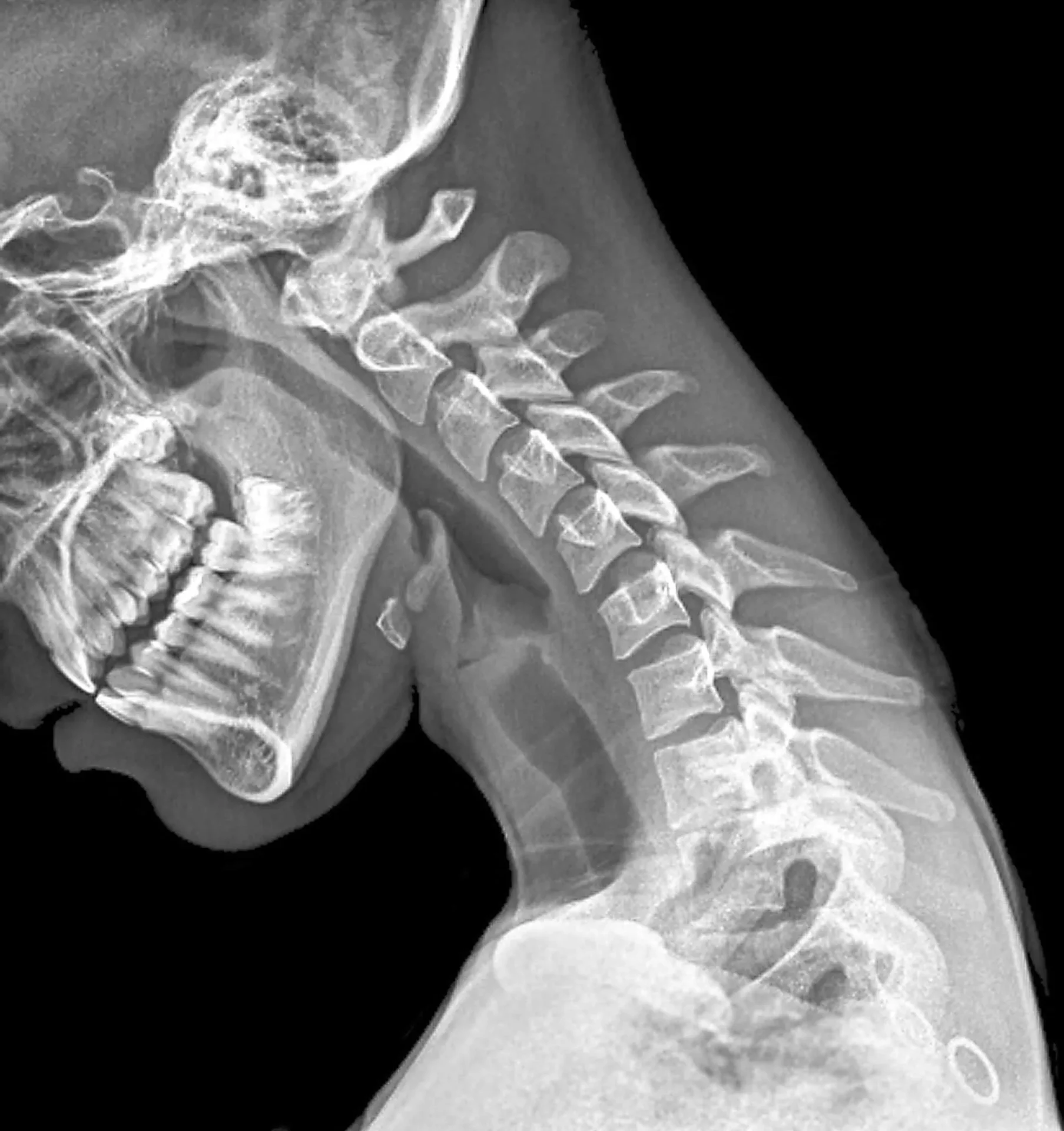
We take a detailed collision history: direction of impact, head position, seat belt use, airbag deployment, where you were struck, and what you felt at the scene versus the next morning. The examination checks range of motion, joint irritation, muscle guarding, strength, reflexes, sensation, balance, and concussion screening when the history warrants it.
Imaging is ordered when trauma history, neurological findings, bone-health concerns, or a stalled response make it likely to change the plan. Findings, functional limits, and objective measures are recorded from day one, because insurers and attorneys ask for exactly that kind of contemporaneous documentation.
Care and recovery
Early care aims to reduce guarding and restore comfortable motion, using adjustments, low-force techniques, soft-tissue work, and graded movement. As tolerance improves, the emphasis shifts to strength, endurance, and confidence for driving, work, lifting, and sport. Passive care alone rarely produces durable results after a collision.
Most uncomplicated seat-belt and shoulder injuries cases show meaningful change in the first several weeks, but duration varies with the severity of impact, nerve involvement, prior injuries, sleep, work demands, and how quickly care starts. We set functional checkpoints and refer to medical or specialty care when the picture calls for it.

Insurance, attorneys, and paperwork
Auto claims frequently pay for injury care through your MedPay coverage, through a third-party claim against the at-fault driver, or on a lien basis while a case is pending. We are used to working with adjusters and personal injury attorneys and can provide narrative reports, objective findings, work restrictions, and progress documentation.
Bring the claim number, adjuster contact, police report number, and your attorney's information if you already have one. If you do not, we can explain how documentation works and let you decide. We never require a legal case to treat anyone.
Which tissues are typically involved
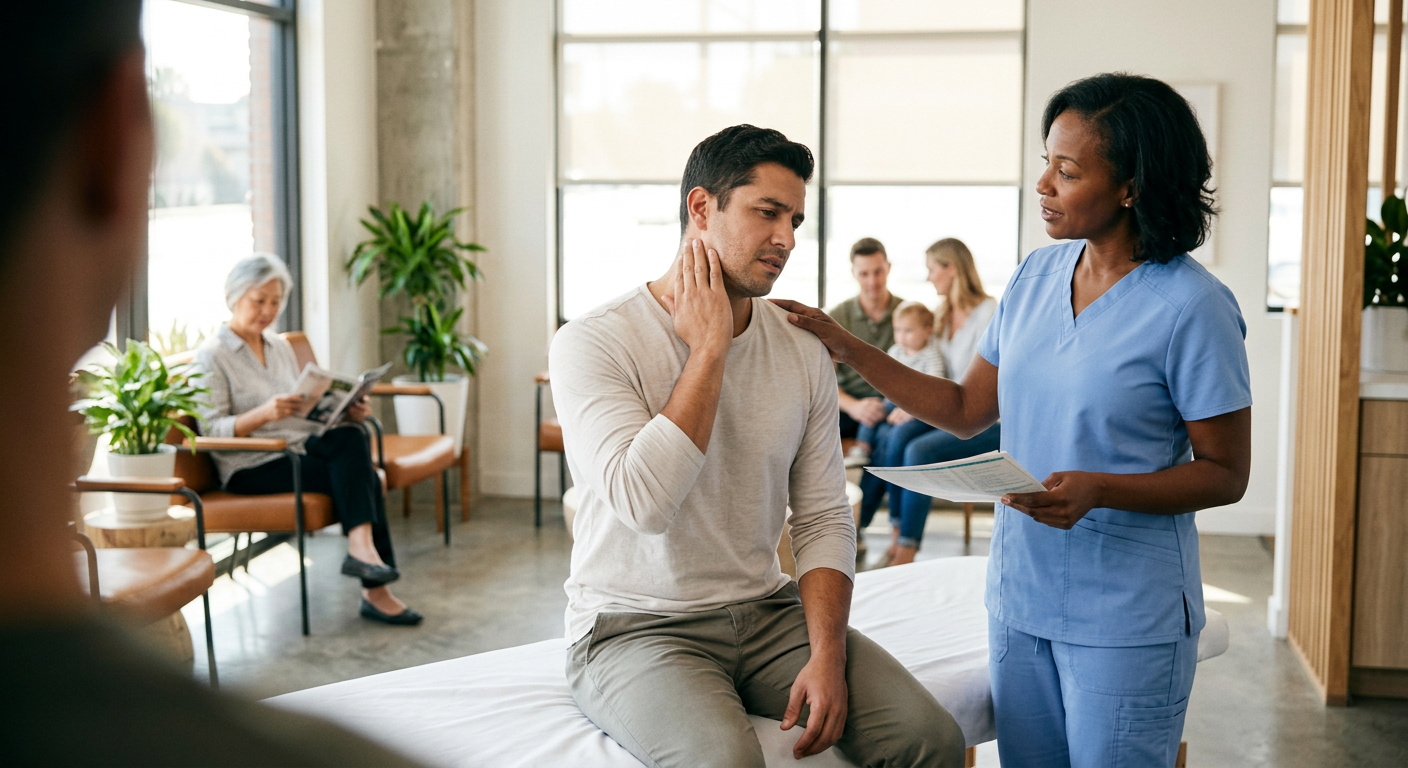
Collision injuries are usually a combination rather than a single structure. Facet joints in the neck and low back become irritated when they are compressed and rotated at speed. Muscles and their tendon attachments strain when they contract to protect a joint they could not brace in time. Ligaments can be overstretched, which is why some people feel unstable rather than simply sore. Discs may be irritated, particularly with a rotational component or a pre-existing change.
Nerves are the other consideration. A nerve root that is irritated near the spine produces a different pattern than muscle pain: symptoms follow a defined path, may include numbness, tingling or weakness, and often change with specific neck or trunk positions. Distinguishing the two is a large part of the first examination, because the care plan and the referral threshold differ.
Why symptoms often worsen before they improve
The body reduces motion around an irritated area to protect it. That guarding is useful for a day or two and unhelpful after that, because stiff tissue is less tolerant, sleep suffers, and the nervous system becomes more sensitive. This is the mechanism behind the very common story of feeling fine at the scene, stiff the next morning, and worse on day three.
Understanding that pattern changes behaviour. People who expect a small increase are less likely to panic and less likely to stop moving entirely. Gentle, frequent motion within comfort is almost always better than full rest, and better than pushing through a sharp increase.
Work, driving and daily life during recovery
Driving is often the hardest early task because it combines sustained sitting, limited rotation, and vigilance. Short trips first, mirrors adjusted so less rotation is needed, and breaks on longer drives all help. Desk work is similar: the problem is usually duration rather than posture, so a change of position every twenty to thirty minutes does more than any single chair adjustment.
Lifting, childcare, and overhead work should be modified rather than avoided outright. We give specific limits where they are warranted and remove them as the examination findings improve, which also gives an employer or insurer something concrete rather than an open-ended note.
Common mistakes after a collision
- Waiting weeks to be evaluated because the soreness seemed minor.
- Assuming no vehicle damage means no injury.
- Resting completely, which lowers tolerance and slows recovery.
- Stopping care as soon as pain eases but before function returns.
- Failing to mention a symptom because it seemed unrelated.
- Long unexplained gaps in treatment, which complicate both recovery and any claim.
What to do this week
- Get evaluated promptly, even for mild soreness.
- Keep gentle movement in the day rather than resting completely.
- Write down symptoms daily; memory fades and records matter.
- Adjust your head restraint so the top sits level with the top of your head.
- Tell every provider about all symptoms, not just the worst one.
Local care for Monrovia drivers
Flintridge Family Chiropractic is about 25 minutes away at 4522 Rinetti Lane, La Cañada Flintridge, CA 91011, and we see collision patients from Monrovia regularly. See our auto injury care page or our Monrovia page for details, then call (818) 937-2202 to arrange an evaluation.
Frequently Asked Questions
Should I see a chiropractor after a minor accident in Monrovia?+
Yes, if you have any soreness. Symptoms often peak two to three days later, and an early exam documents findings while they are fresh. Call (818) 937-2202.
Will my auto insurance cover the visits?+
Often yes, through MedPay, a third-party claim against the at-fault driver, or lien-based care while a case is pending. We can explain which applies to your policy.
Do I need an attorney to be seen?+
No. We treat collision patients with or without a legal case and coordinate with attorneys only when a patient has one.
How soon can I be seen?+
Post-collision evaluations are prioritized and are usually available within a few business days. Call (818) 937-2202 to arrange one.