
How to Crack your Hips like a Chiropractor? An Honest Answer From Foothill Chiropractors
You can safely mobilize your own spine with movement — open-book rotations, cat-camel, foam rolling, hip rotations — but you cannot replicate a...
If you have typed “how to crack your hips like a chiropractor” into a search bar, you want a clear answer rather than a sales pitch. This guide gives you one, written by the doctors at Flintridge Family Chiropractic in La Cañada Flintridge — a four-doctor family practice that has cared for Foothill families, desk workers, weekend athletes and professional players for more than two decades.
The Short Answer
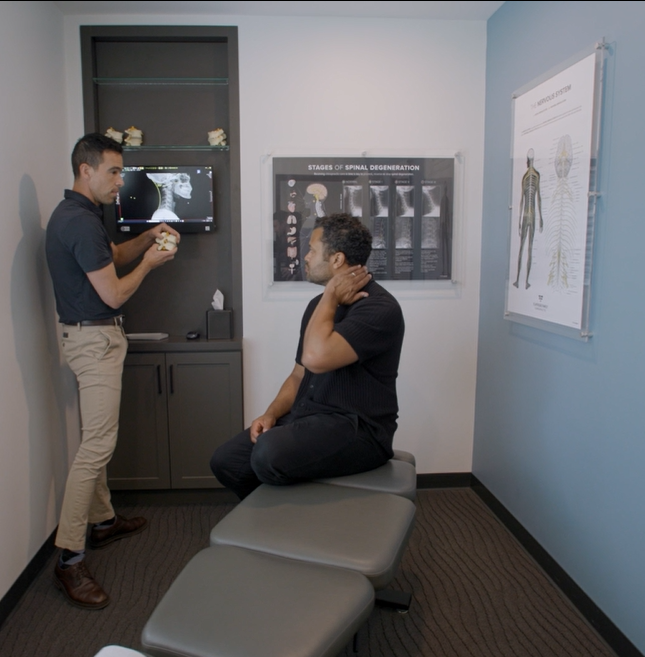
You can safely mobilize your own spine with movement — open-book rotations, cat-camel, foam rolling, hip rotations — but you cannot replicate a specific adjustment on yourself. Self-cracking moves whichever joint is already loosest, which is usually the one causing trouble, so relief is brief and the habit repeats.
Below we unpack that answer properly: what the profession actually is, what the evidence supports, where the honest limits are, and how to decide what to do next.
Doing It Yourself: What Is Reasonable And What Is Not
You cannot adjust yourself the way a trained clinician adjusts you. A chiropractic adjustment is specific — one restricted joint, a chosen line of drive, a shallow and controlled amplitude. Self-cracking is non-specific: it moves whichever segment is already loosest and hypermobile, which is usually the one causing the problem, not the stiff neighbor that needs the motion. That is why the relief lasts about twenty minutes and the urge comes back.
Reasonable at home:
- Open-book thoracic rotations on your side, ten per side, breathing out at end range.
- Cat-camel on hands and knees, ten slow cycles.
- Foam roller across the mid back, arms crossed, breathing through the stiff spot.
- 90/90 hip rotations, seated or on the floor, to free the hips instead of grinding the low back.
- Chin tucks and band pull-aparts for the neck and upper back.
- Glute bridges and hip hinges to load the tissue that keeps the spine quiet.
- Doorway pec stretch, thirty seconds each side.
Not reasonable:
- Yanking your own head with your hands for a neck crack. The neck does not tolerate uncontrolled rotation combined with force, and you cannot screen yourself.
- Having a friend, partner or child stand or bounce on your back.
- Hanging or twisting hard when you have fresh nerve symptoms — shooting pain, numbness or weakness down a limb.
- Chasing the pop. The goal is motion and less pain, not sound.
If you feel the need to crack the same spot several times a day, that is a signal that a nearby segment is stiff and the loose one is compensating. That is exactly what an examination sorts out.

What The Work Involves Day To Day
Most of a chiropractor's caseload is mechanical pain: low back pain, neck pain, headaches with a neck origin, mid-back and rib restrictions, sciatica and disc-related nerve pain, shoulder, hip, knee, elbow, wrist and ankle complaints, whiplash after a car accident, and posture-driven strain from desks and phones.
The tools are wider than most people expect:
- Spinal and extremity adjustments — a quick, shallow, specific thrust into a restricted joint to restore motion. The pop is nitrogen gas releasing from joint fluid, not bones grinding or realigning with a crunch.
- Low-force and instrument techniques — drop-table, activator, flexion-distraction and mobilization for patients who should not or do not want to be twisted.
- Soft-tissue work — myofascial release, trigger-point therapy, instrument-assisted work on scar tissue and adhesions.
- Rehabilitation — the part that actually keeps the result. Loading the tissue that failed, progressively, with a home program.
- Ergonomics and load management — changing the desk, the pillow, the training volume or the lifting pattern that produced the problem.
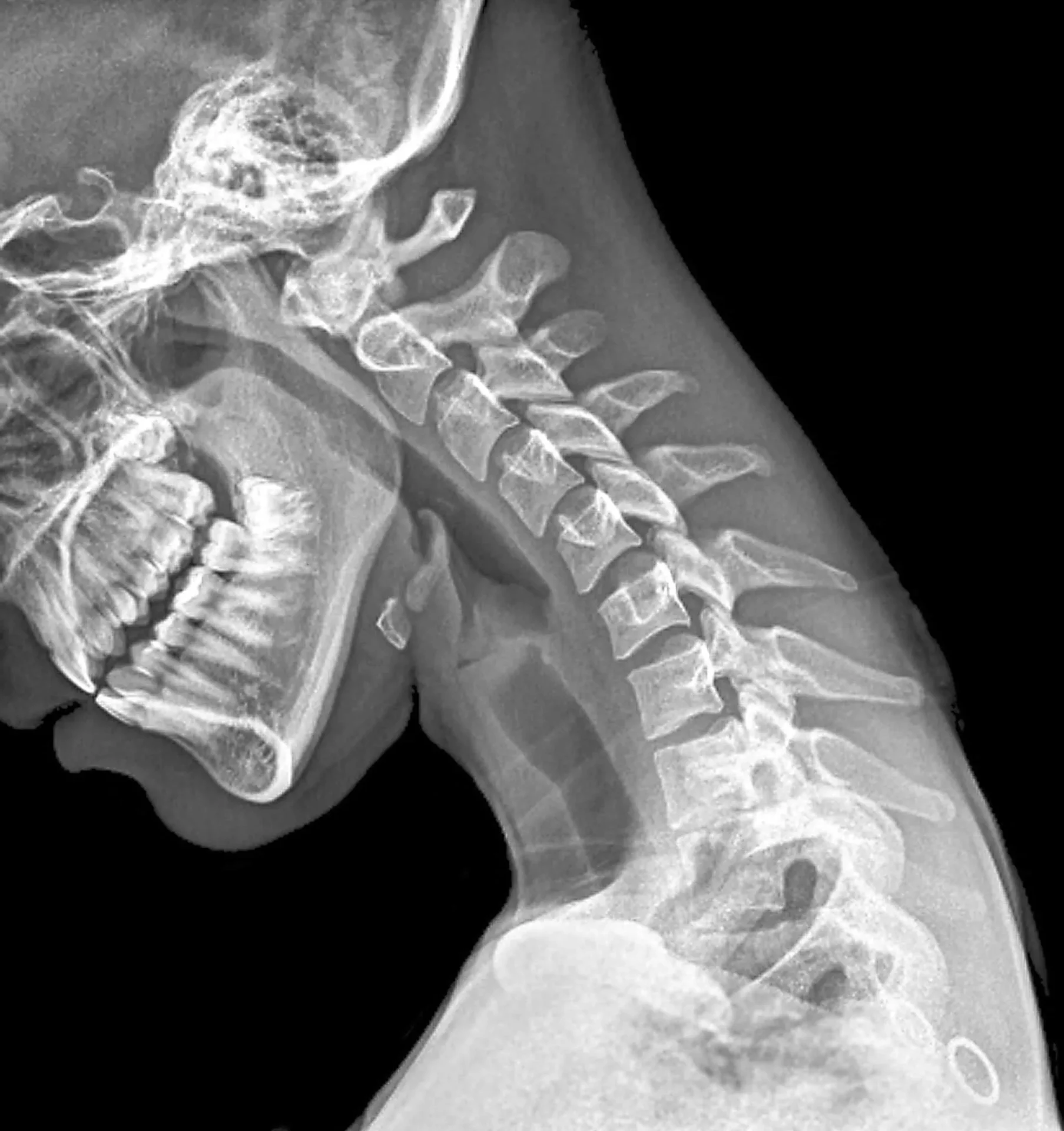
- Imaging and referral — digital X-ray on site, and referral for MRI, orthopedic, neurological or primary-care evaluation when findings call for it.

Risk, Stated Plainly
The common side effect is soreness. Roughly one in three patients feels achy or tired for twelve to forty-eight hours after a first adjustment, similar to the day after starting a new workout. It fades, and it is not a sign of damage.
Serious complications are rare. The most discussed is cervical artery dissection associated with neck manipulation; large population studies have found the association is very small and that patients presenting with neck pain and headache from an artery already tearing are just as likely to have visited a primary care physician first. Rare does not mean zero, which is why screening matters.
Care should be modified or avoided when there is significant osteoporosis, inflammatory arthritis affecting the upper neck, an unstable fracture, bone infection or tumor, an unexplained neurological deficit, cauda equina symptoms, or an unmanaged bleeding disorder. A competent chiropractor screens for all of it before touching you, and chooses a low-force technique or refers out if the screen raises a flag.
Go to an emergency department, not a chiropractor, for sudden worst-ever headache, slurred speech, facial droop, double vision, loss of bowel or bladder control, saddle numbness, progressive limb weakness, unexplained weight loss with night pain, or fever with spinal pain.
What A First Visit Looks Like
- History. What happened, when, what makes it worse, what you have already tried, your medical history and medications.
- Examination. Posture, range of motion, orthopedic tests, neurological screening — reflexes, muscle strength, sensation — and palpation of the joints and soft tissue.
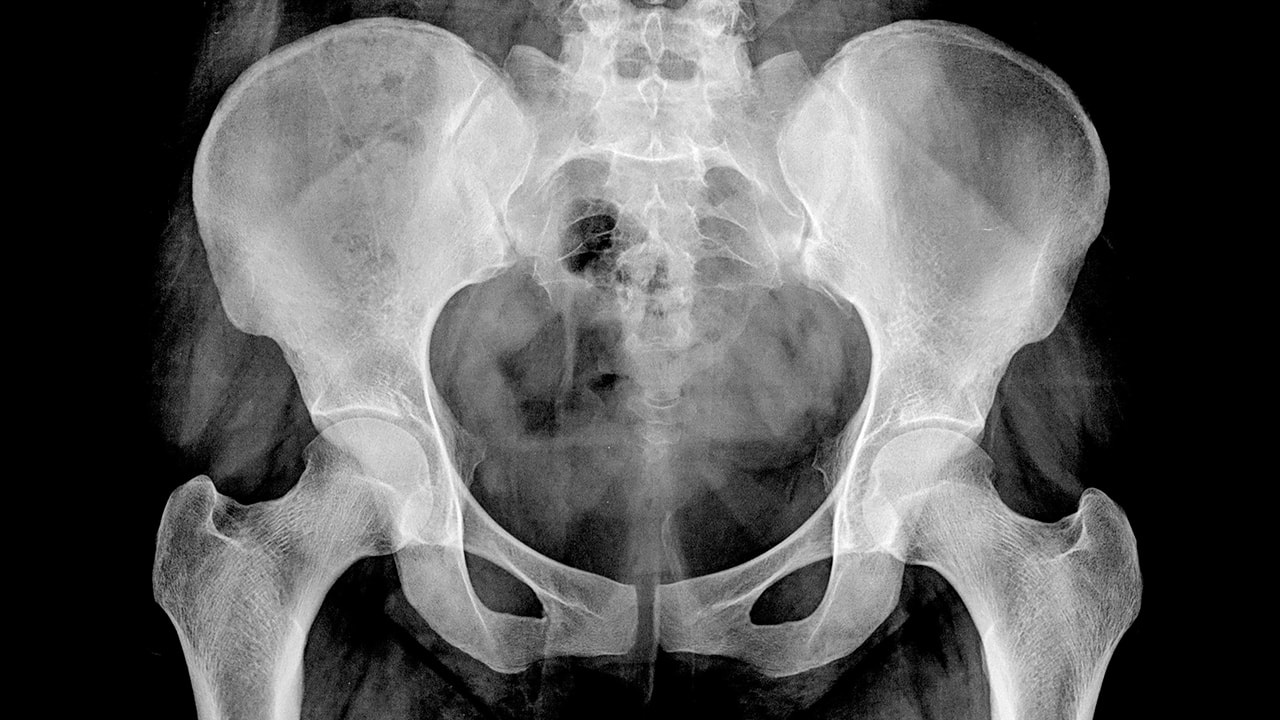
- Imaging if indicated. Digital X-ray on site when history or examination suggests something structural would change the plan. Not everybody needs it.
- Report of findings. In plain language: what is wrong, what we can do, how long it should take, and what would make us send you elsewhere.
- Treatment. Usually the same day if it is appropriate.
Wear comfortable clothing you can move in — leggings, athletic shorts, a t-shirt. Jeans with thick seams and belts make examination harder. You are not asked to undress; a gown is offered only when a region cannot otherwise be assessed, and you can always request a chaperone. Plan on forty-five to sixty minutes for the first visit and ten to twenty for follow-ups.
What You Can Do This Week
- Move often. Whatever hurts, total stillness usually makes it worse after the first day or two.
- Walk ten to twenty minutes twice a day; it is the most reliable free treatment for spinal pain.
- Break up sitting every thirty minutes — stand, extend, roll the shoulders back.
- Set the screen at eye height and bring the phone up instead of dropping your head down.
- Sleep on your back or side, with pillow height that keeps your ears in line with your shoulders.
- Load the area gently rather than bracing it: hip hinges, glute bridges, chin tucks, band rows.
- Use heat for stiffness, ice for a fresh, angry injury in the first forty-eight hours.
None of this replaces an examination, but all of it helps, and none of it costs anything.
Local Notes For The Foothills
We see a specific mix in La Cañada Flintridge and the surrounding communities: JPL and studio professionals with desk-driven neck pain, high-school and club athletes from La Cañada, Crescenta Valley and St. Francis, hikers and cyclists off the Angeles Crest and Arroyo, gardeners and parents lifting kids and boxes, and drivers hurt on the 210 and Foothill Boulevard. If you are coming from Pasadena, Glendale, Altadena, Montrose, Sunland-Tujunga, Burbank or Sierra Madre, we are ten to twenty minutes away with parking at the door.
Talk To A Real Doctor About It
If you want a straight answer about your own back, neck or joint, call (818) 937-2202 or stop by 1809 Verdugo Blvd, Suite 150, La Cañada Flintridge. Flintridge Family Chiropractic has served La Cañada Flintridge, Pasadena, Glendale, Altadena, Montrose and the surrounding Foothill communities for over twenty years. Four doctors, digital X-ray on site, and a written plan on your first visit. Ask about our new patient special when you call.
This article is general education, not medical advice for your specific situation. An examination is what turns general information into a plan.
Frequently Asked Questions
Is it bad to crack your own back?+
Occasional self-mobilization is not dangerous for most people, but it is non-specific and tends to move the joints that are already too loose. Repeated self-cracking of the neck in particular is worth replacing with a proper examination.
Do I need a referral to see a chiropractor?+
No. Chiropractors are primary-contact providers in California, so you can book directly. Some HMO plans require a referral for coverage even though the law does not, so check your plan.
Does an adjustment hurt?+
Usually not. Most patients describe pressure and a release. Inflamed areas can be tender, and there are low-force options for anyone who is sensitive or nervous.
How many visits will I need?+
Most people notice a real change in two to four visits. Acute problems commonly settle in two to four weeks; long-standing or nerve-involved cases usually take six to twelve weeks with a home program.
Do you take insurance?+
We accept most major plans and verify your benefits before treatment begins. If you are paying out of pocket, ask about the new patient special when you call (818) 937-2202.
Will I be locked into a long treatment plan?+
No. We re-examine, we tell you when you are done, and we do not sell multi-year contracts.