
Core Strength Without Crunches: What Actually Protects Your Back
Core Strength Without Crunches: What Actually Protects Your Back — plain answers from the doctors at Flintridge Family Chiropractic in La Cañada Flintridge. C
This guide covers core training the way we explain it in the office at Flintridge Family Chiropractic in La Cañada Flintridge — without the sales pitch, and without pretending the research is more certain than it is.
The Short Answer
Most confusion about core training comes from treating it as a yes-or-no question. It is almost always a question of dose, timing and context: how much, how often, and for whom.
Questions about your own situation are best answered in person. Call (818) 937-2202.

Start With What the Evidence Supports
Research on core training is broadly consistent on the fundamentals and genuinely uncertain at the edges. The fundamentals: movement helps, graded loading builds tolerance, and confidence in the plan predicts outcomes almost as strongly as the plan itself. The uncertain edges are the specifics — exact technique, exact dose, exact sequencing — which is why an honest provider adjusts based on how you respond rather than defending a protocol.
How We Apply It
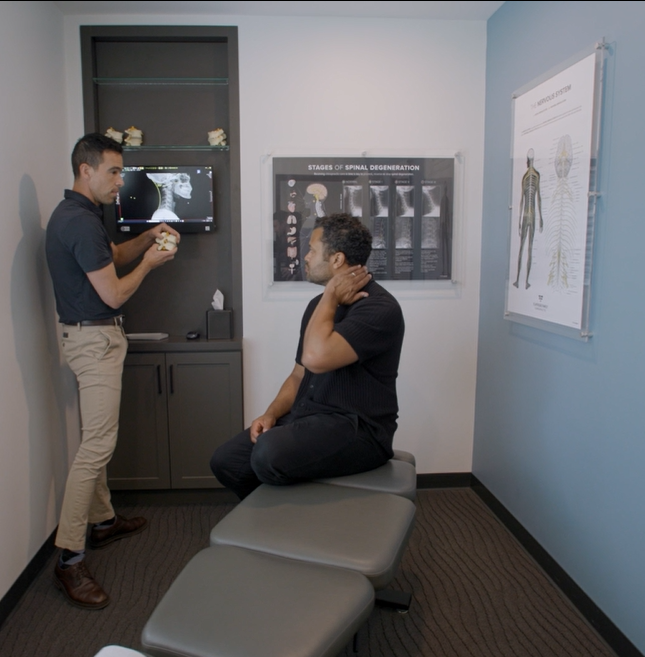
We start with an examination that includes conversation, movement testing and, where symptoms travel, neurological screening. Then we pick the least invasive thing likely to change your day, try it, and measure. If two to three weeks pass without a meaningful change, we change the plan rather than repeating it.
A simple framework
- Calm it down. Reduce the provocative load, restore motion, sleep better.
- Build it up. Add strength and tolerance in small, boring increments.
- Prove it. Return to the activity that mattered, and keep enough training to hold the gain.
What People Get Wrong
The most common mistake is chasing relief without ever building capacity, which produces a loop of feeling better and re-flaring. The second is the opposite — pushing hard through a genuinely irritated tissue and losing three weeks to it. Between those two is a fairly wide, forgiving middle.
Where the Nuance Lives
The disagreements about core training are mostly about people at the edges: the very irritable, the very deconditioned, the very high-performing, and the ones carrying a long history with the problem. Advice built for the middle of the curve can be actively unhelpful at the edges, which is why blanket rules age badly and individual assessment does not.
A Realistic Timeline
Expect the first meaningful change in one to three weeks, a comfortable plateau somewhere between weeks four and eight, and durability — the part most people skip — after that. The final stretch is the least exciting and the most protective, because it is where capacity is built rather than symptoms chased.
Common Questions We Hear in the Office
“Should I stop what I love doing?” Rarely permanently. Usually modified for a few weeks.
“Will it come back?” Episodes recur for many people. The goal is shorter, milder, less frequent — and knowing exactly what to do when one starts.
“Am I making it worse by moving?” Discomfort that settles within a half hour is usually fine. Pain that escalates for hours afterwards is a signal to reduce the dose, not to stop entirely.

What We Would Tell a Friend
Do less than you think in week one and more than you think in week four. Get an examination if you are guessing. Do not let a scan report write your story. And pick the version of the plan you will actually follow — an imperfect routine you do beats a perfect one you read about.
Where the Nuance Lives
The disagreements about core training are mostly about people at the edges: the very irritable, the very deconditioned, the very high-performing, and the ones carrying a long history with the problem. Advice built for the middle of the curve can be actively unhelpful at the edges, which is why blanket rules age badly and individual assessment does not.

A Realistic Timeline
Expect the first meaningful change in one to three weeks, a comfortable plateau somewhere between weeks four and eight, and durability - the part most people skip - after that. The final stretch is the least exciting and the most protective, because it is where capacity is built rather than symptoms chased.
Common Questions We Hear in the Office
Should I stop what I love doing? Rarely permanently. Usually modified for a few weeks.
Will it come back? Episodes recur for many people. The goal is shorter, milder, less frequent - and knowing exactly what to do when one starts.
Am I making it worse by moving? Discomfort that settles within a half hour is usually fine. Pain that escalates for hours afterwards is a signal to reduce the dose, not to stop entirely.
What We Would Tell a Friend
Do less than you think in week one and more than you think in week four. Get an examination if you are guessing. Do not let a scan report write your story. And pick the version of the plan you will actually follow - an imperfect routine you do beats a perfect one you read about.
Practical Steps for This Week
- Pick one change you can repeat daily, not five you will abandon.
- Walk every day, even for ten minutes.
- Track two lines a day: what you did, how you felt.
- Give any single strategy two weeks before judging it.
- Ask for a re-examination if nothing has moved.
When to Get It Looked At
Get seen if symptoms are worsening week over week, if there is weakness or numbness that does not come and go, if pain wakes you consistently at night, or if you are simply avoiding things you care about. Waiting rarely makes the case simpler.
About Our Office
Flintridge Family Chiropractic is at 1809 Verdugo Blvd, Suite 150, La Cañada Flintridge, CA 91011, serving La Cañada Flintridge, Pasadena, Glendale, Altadena, La Crescenta, Montrose, Burbank and the surrounding Foothill communities. Four doctors, more than fifty years of combined experience, and 2,100+ five-star Google reviews. Most insurance accepted. Se habla español.
Call (818) 937-2202 to ask about the current new-patient offer or to book an appointment.
Frequently Asked Questions
What is the most important thing to know about core training?+
That it is a question of dose and context rather than a yes-or-no rule. The right amount, at the right time, for your specific situation.
How long before I should expect a change?+
Two to three weeks of consistent effort is a fair trial for most strategies. Beyond that without change, the plan should be re-examined rather than repeated.
Do I need to see a chiropractor for this?+
Not always. If self-management is working, keep going. If it is not, or symptoms are worsening, an examination saves time. Call (818) 937-2202.
Is chiropractic care safe?+
For the great majority of people, yes. Serious adverse events are rare, and a thorough history and examination exist specifically to identify the people for whom a different approach is safer.